
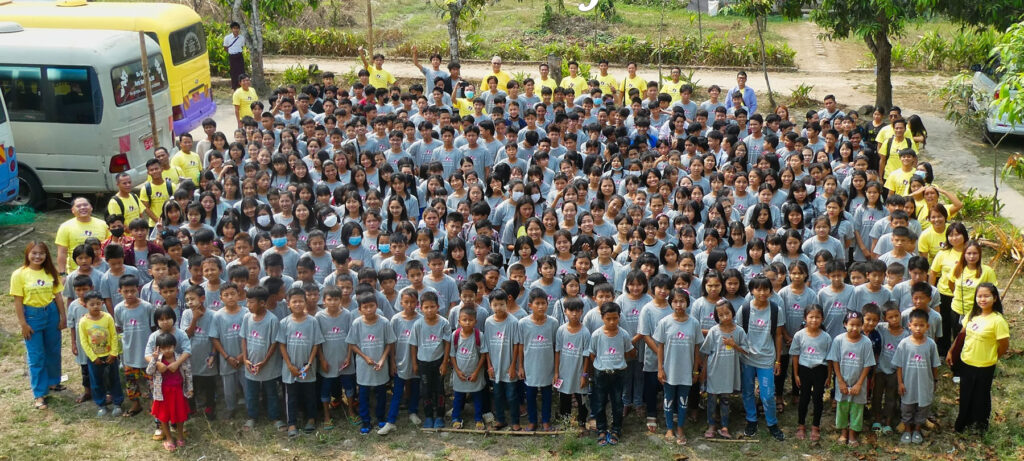
Protecting Partners, Serving Myanmar’s Children
Myanmar’s current climate requires careful discretion. Many of the orphanages and children’s homes partnered with the Esther Project operate in areas where visibility carries genuine risk — to their staff, their children, and their continued ability to serve. Out of respect for their safety and in order to protect the work they are doing, a number of our partners have chosen not to have their information publicly disclosed.
We honor that decision without hesitation. The work happening in those homes is no less real, no less vital, and no less worthy of support — it simply must be protected. Those who give toward the Esther Project can be assured that every partner, named or unnamed, has been carefully vetted and is faithfully serving vulnerable children in some of Myanmar’s most difficult corners.
Jehovahjireh Children's Home
Jehovahjireh Children’s Home was not born from a strategic plan — it was born from a calling. When Sayama Deborah relocated to Yangon, she began doing what came naturally: opening her heart and her home. She took in children from her brother’s family, then her sister’s, then her husband’s uncle’s. When a Buddhist friend passed away, she welcomed those children too, without hesitation.
What began as quiet acts of compassion slowly revealed itself as something greater — a divine purpose. Through prayer, Sayama Deborah and her family consecrated their home to God, giving it a name that would become their daily declaration: Jehovahjireh, meaning “The Lord Will Provide.”
For over 32 years, that name has proven true.
The home has raised countless children in faith, offering them not only shelter and love, but an education with the power to transform their futures. The fruit of that investment is undeniable — 9
children have gone on to become pastors, 10 have earned university degrees, and one has become a medical doctor.
Through every season, every challenge, and every provision, Sayama Deborah’s testimony remains unchanged: God has never stopped being their Jehovahjireh — their faithful, unwavering provider.
Corner Stone Children's Home was never part of a plan — it was an answer to a need.
In 2017, Uk Ling Thang made his way to Yangon to study at Bible college. His path took an unexpected turn when he took in a relative’s child who had nowhere else to go. That single act of compassion quietly spread — word traveled back to his village, and soon families caring for orphaned or vulnerable children began reaching out, hoping he might have room for one more. He did.
What began with one child has grown into a home for 22 children, each one known by name, loved, and given the chance to thrive.
At Corner Stone, the mission is simple but profound: to meet children in their need, introduce them to a God who sees and loves them, and walk alongside them as they grow into the people they were created to be. Faith is not a program here — it is the heartbeat of the home.
The impact of that investment is already being felt. Corner Stone alumni have gone back to their communities as spiritual leaders and prayer warriors. Others are spreading the Gospel through music and worship. Many have stepped into independent adulthood with confidence, purpose, and a faith that is entirely their own.
Corner Stone is more than a children’s home. It is a foundation — a place where broken beginnings do not determine final outcomes, and where every child is given something priceless: the chance to start again.
Makarios Children Home was founded on a conviction that true faith shows up in practical love.
In 2013, L. Khai Paw responded to the call of James 1:27 — to care for orphans in their distress — by opening her home to 12 children who needed exactly that. From the beginning, her vision was threefold: to share the Gospel with each child and, through them, reach their families; to provide a strong academic foundation; and to equip them with the skills to build independent, dignified lives.
More than a decade later, that vision is bearing fruit in remarkable ways.
Makarios alumni are scattered across hospitals, universities, ministry schools, workplaces, and homes of their own. Some have gone on to pursue university degrees. Others are serving as nurses, caring for the sick and vulnerable. Several are studying ministry in India, preparing to give back what was so freely given to them. Others have ventured abroad for work, and many have married and built stable, flourishing families.
Each of these lives represents a story that could have gone very differently.
Today, Makarios Children Home continues to care for 15 children, nurturing them in faith, investing in their education, and preparing them — practically and spiritually — for everything ahead. The name
Makarios means blessed, and that remains both the prayer and the promise over every child who calls this place home.
True Vine Children's Home grew out of a life already given to serving others.
Sayama Kay Ti spent years working at her aunt’s orphanage, pouring herself into the care of children who had little else. That season didn’t just shape her — it ignited something in her. In 2005, she stepped out in faith and opened her own home, welcoming 20 children and taking on the full weight of their care largely on her own. Her commitment in those early years was quiet, steady, and total.
In time, she was joined by her husband, and what had been a solo calling became a shared one — a partnership built around the children they were both devoted to serving.
Twenty years on, the fruit of that faithfulness is visible in real lives. Former residents of True Vine have grown into independent adults, standing on the foundation that was laid for them during their years in the home. The legacy is not measured in programs or statistics, but in people — men and women who were once children in need of a safe place, and who found one here.
Today, True Vine continues that same work. Children in the home receive not only shelter and care, but love, guidance, and the space to grow — in character, in responsibility, and in faith. Sayama Kay Ti remains as devoted as ever to ensuring that every child who comes through her doors is, as the name promises, truly rooted in Christ — anchored to something that will hold them long after they leave.
Blessed Children Home was founded by someone who knows firsthand what it means to grow up without enough.
Ni Ni Nah lost her mother at a young age. Poverty shaped her childhood. Educational opportunities that others took for granted were simply out of reach. Hers was a beginning that could have defined her — but it didn’t.
In 2012, she came to Yangon and enrolled in a Bible training course. There, she encountered Jesus Christ in a way that changed everything. The adversity she had carried for so long became the very thing that gave her a clear sense of purpose: to make sure other vulnerable children would not face the world alone.
In 2021, Ni Ni Nah opened Blessed Children Home — starting, as many great things do, with just one child.
Today, the home cares for seven children, each one given what Ni Ni Nah herself once lacked: a secure place to live, consistent love, and a future worth looking forward to. The atmosphere she has created is not simply one of provision, but of belonging — rooted in the love of Christ and the belief that every child carries God-given worth and potential.
Ni Ni Nah speaks of her work not as a burden, but as a gift. She remains deeply grateful for the calling she has been given — to nurture children who need it most, and to do so for His glory.
What was once her story of lack has become their story of blessing.
Bethel Family Home was shaped long before it ever opened its doors.
Growing up, Saya Tisan watched his father do something simple and profound: he took in the homeless and cared for them without fanfare, driven by nothing more than compassion. That example took root in Saya Tisan quietly, deeply — and over time, it grew into a calling he could not ignore.
In 2014, he founded Bethel Family Home with a clear intention: not merely to provide shelter for children who were poor and orphaned, but to give them something harder to find and more lasting — a real family environment. A place where they were not just housed, but known, loved, and believed in.
The results speak for themselves.
Children who once had nothing to their name have gone on to build remarkable lives. Some are now serving as pastors, shepherding communities of faith. Others have become engineers, solving problems and building futures. Each of them carries something from Bethel — a foundation of love, faith, and someone who saw their potential before they could see it themselves.
Today, 15 children call Bethel Family Home their own. They are growing up in the same atmosphere Saya Tisan has always envisioned: warm, faith-filled, full of care, and anchored in genuine hope for what lies ahead.
A father’s quiet example became a son’s lifelong mission. And that mission is still changing lives.
Bethel Home began not with a blueprint, but with a prayer.
Sayama Pan Hlei knew she wanted to help children in need — she just didn’t yet know how. Inspired by her father’s quiet, generous spirit, she brought that desire before God and waited. After graduating from Bible college, her path began to take shape in ways she hadn’t anticipated.
The first children who came into her care were her own nephews and nieces, after the sudden loss of her elder brother. Grief and calling arrived together. She opened her home to them, and before long, word reached her about other orphaned children with nowhere to go. Each call confirmed what she was beginning to understand: this was not simply something she had chosen — it was something she had been chosen for.
Then, four years later, her younger brother also passed away. More children. More grief. More room made at the table.
What began with five children has grown — through loss, through faith, through an ever-expanding capacity to love — into a full and flourishing household of thirteen children.
Sayama Pan Hlei leads Bethel Home today with the same quiet conviction that set her on this path. She is more than a caregiver — she is a spiritual mother, present in the everyday moments that shape a child’s sense of worth and belonging. Her faith has not wavered through the hardships. If anything, it has deepened.
Bethel Home is the story of a woman who asked God for direction — and then said yes to everything that followed.
Eden Home Family was founded on a simple but powerful belief: that every vulnerable child deserves more than survival — they deserve a chance to truly flourish.
In May 2008, Hkawn San Ja established Eden Home Family in Shwepyithar, Yangon, with that belief as her foundation. From the beginning, her vision went beyond providing basic shelter and care. She wanted to build an environment where children could discover their potential — academically, emotionally, and spiritually — and be given every resource to reach it.
Over the years, that vision has translated into real, measurable transformation.
Children who came to Eden Home Family with uncertain futures have gone on to pass their Grade 10 exams — a significant milestone in Myanmar’s education system. Many have continued further, earning university degrees that open doors their early circumstances might have kept firmly shut. These are not small achievements. For children who began with so little, they represent lives fundamentally redirected.
Riverside Orphanage was born in one of Myanmar's darkest hours.
When the military coup of 2021 plunged the country into crisis, the most vulnerable paid the highest price. Among them were children — displaced, unprotected, and in desperate need of stability. It was into this moment that Riverside Orphanage came to life, founded with an urgent and unwavering mission: to be a place of safety, and more than that, a place of transformation.
The 12 children in the home have each found more than shelter here. According to the founders, every one of them has come to know Jesus Christ personally — a testament to the spiritual intentionality woven into every aspect of life at River Side.
But the work goes beyond faith decisions. The founders are deeply committed to shaping character — raising children who are honest, responsible, and genuinely invested in the wellbeing of those around them. In a nation where so much has been broken, they are quietly building something whole: young lives grounded in truth, integrity, and a sense of purpose that no political upheaval can take away.
Riverside Orphanage is more than a response to crisis. It is a declaration that even in the hardest of times, children deserve to be loved, formed, and given every reason to hope.
Stronghold Orphanage was established in the aftermath of Myanmar's 2021 military coup — a time when countless children were left without safety, stability, or anyone to turn to.
In Hmawbi Township, Yangon, Stronghold became exactly what its name implies: a place that holds firm when everything around it is uncertain. From the beginning, the mission has been clear — to bring the life-changing message of Jesus Christ to children who have already experienced far too much loss, and to give them something unshakeable to build their lives upon.
That mission is bearing fruit in the most meaningful way possible. Every one of the 24 children in the home has come to embrace Christ as their personal Savior — a reality the founders and staff do not take for granted. In a season marked by chaos and grief across Myanmar, these children have found faith, and with it, genuine hope.
Stronghold Orphanage is not simply a place where children are kept safe — though they are. It is a place where young lives are being fundamentally transformed: shaped by love, anchored in truth, and pointed toward a future that the circumstances of their birth could never have promised them.
The nation around them is still finding its footing. But these 24 children are standing on solid ground.
Gospel for Myanmar Orphanage was established in 2019 with a conviction that vulnerable children deserve to be cared for completely — body, mind, and spirit.
Located in Hmawbi Township, Yangon, the home was founded on two commitments that its leaders hold with equal seriousness: introducing every child to the saving message of Jesus Christ, and equipping each one with a strong academic foundation for life ahead. Neither is treated as secondary. Both are understood as essential.
The founders take genuine, personal joy in the milestones they witness — a child coming to faith, a child excelling in their studies, a child beginning to see themselves as someone with a future worth pursuing. These moments are not routine to them. They are the whole point.
In a country where so many children have been left behind by circumstance, Gospel for Myanmar Orphanage stands as a quiet but determined declaration: that these children matter, that their potential is real, and that with the right investment of love, faith, and education, they are capable of remarkable things.
The next generation of Myanmar is being shaped in homes like this one. Gospel for Myanmar Orphanage is committed to making sure the children in its care are ready — rooted in Christ, prepared for life, and full of purpose.
Victory Children's Home has been quietly changing lives since May 2008.
The mission has always been straightforward: to offer children the gift of salvation, and to walk alongside them as they grow into people of genuine character and faith. But the transformation that happens here goes far deeper than programs or routines — it is personal, real, and often remarkable to witness.
Many children arrive with a Christian background, yet something shifts when they encounter faith on their own terms at Victory. Personal decisions are made. Lives are reoriented. Most children in the home have come to accept Jesus as their Savior — and for the majority, that commitment has been marked by baptism. These are not inherited beliefs. They are convictions owned.
From there, the work of formation continues. Children are immersed in the spiritual disciplines that build a life of faith from the inside out — quiet time, prayer, fasting, and the courage to share their own testimonies in community gatherings. Leadership opportunities are woven into daily life, giving children the chance to develop confidence and responsibility in practical, meaningful ways.
The results are visible and sometimes dramatic. Children who arrived carrying destructive habits — smoking, drinking, patterns picked up from hard circumstances — have experienced complete turnarounds. They leave those habits behind, not out of obligation, but out of genuine transformation. Some go on to share their stories beyond the walls of the home, becoming living testimonies in the wider community.
Victory Children’s Home is raising more than well-cared-for children. It is raising future leaders — grounded in faith, shaped by discipline, and ready to make a difference in the communities they return to.
Blessed Hope Children's Home exists for one clear purpose: to raise up a new generation for Christ.
Rooted in the words of Titus 2:11-15, the home is built around the conviction that children are not just in need of care — they are being prepared for a calling. Every aspect of life at Blessed Hope is shaped by that belief. Children are nurtured in salvation, grounded in the truth of God’s Word, and steadily equipped to become devoted followers of Jesus Christ who live with integrity and walk in genuine, daily trust in the Living God.
The teaching here goes beyond knowledge. Children are formed in the habits and character that make faith real — learning to live soberly, righteously, and purposefully in a world that often pulls in the opposite direction. A Christ-centered worldview is not just taught; it is modeled, practiced, and woven into the rhythms of everyday life. The goal is not simply children who know about God, but young men and women prepared to serve Him wholeheartedly.
Founder Philip leads this work with humility and deep commitment. He carries both the joy of seeing children grow in faith and the very real weight of practical need. He asks for two things from those who feel moved by this work: prayer and partnership.
Specifically, there is an urgent need for support toward the children’s ongoing education and the construction of proper accommodations — foundations that will allow Blessed Hope to continue its mission with stability and dignity.
The Coleman House is built on a single, animating purpose: to glorify God by raising children who truly know Him.
That means more than spiritual formation alone. At The Coleman House, faith and education are understood as deeply connected — each one strengthening the other. Every child is encouraged to pursue academic excellence not in spite of their faith, but as an expression of it. And every child is given the tools, the support, and the belief that they are capable of achieving it.
One program has become a particularly powerful example of what that looks like in practice.
The Esther Project has had a transformative impact on the children at Coleman House. What began as an opportunity to grow in English language skills has blossomed into something far broader. Children who once hesitated to speak up are now communicating with confidence — not just in English, but in every area of their lives. They are more articulate, more self-assured, and more willing to engage with the world around them.
It is a reminder that the right investment, made at the right time, can unlock things in a child that were always there waiting.
The Coleman House remains committed to that kind of intentional, holistic care — where strong academics and a deep faith foundation are not competing priorities, but a single, unified vision for every child in its home: to know God personally, to grow without limits, and to serve Him faithfully in whatever comes next.
Grace Children Home has been a refuge for Myanmar's most vulnerable children since 2011.
For children who have lost parents or grown up without the stability most take for granted, Grace Children Home offers something foundational: a safe place to belong, an education to build on, and a community of faith to grow within. From the beginning, the home has been committed to caring for the whole child — not just meeting immediate needs, but investing in who each child is becoming.
That long-term investment is paying off in ways that continue to inspire.
Many former residents stay in close contact with the home long after they leave — a quiet but telling sign of the bonds formed here. Some have embraced faith and are now actively involved in evangelism, carrying into their communities what they discovered within these walls. Others have pursued higher education abroad, opening doors that once seemed far beyond reach.
At Grace Children Home, academics and spiritual development are not treated as separate tracks. They are woven together intentionally, because the goal has always been to raise children who are not only capable of standing on their own, but who do so with character, confidence, and a genuine sense of purpose.
Every child in the home attends school consistently. Every child is known and cared for as an individual. And every child leaves better prepared — for self-sufficiency, for meaningful contribution to society, and for a life shaped by something greater than circumstance.
Grace, it turns out, is exactly the right name.
Shalom Orphanage was founded in 2021 with a vision that refuses to think small.
From the very beginning, the goal has been to walk with children for the long haul — not just through primary school, but all the way through tertiary education and into independent, self-sustaining adulthood. In a country where vulnerability can feel like a life sentence, Shalom is committed to making sure that for the children in its care, it is not.
Education is the backbone of that commitment. Every child is supported academically at every stage of their journey, given the tools and encouragement they need to keep going when the road gets hard. But the work doesn’t stop at academics. Woven through everything at Shalom is a dedication to spiritual formation — sharing the light of God’s Word and nurturing a faith that gives children an anchor, an identity, and a reason to keep pressing forward.
The vision is broader still. Shalom exists not only to transform individual lives, but to send resilient, capable, hope-filled young people back into their communities — where their strength becomes a resource for others facing the same challenges they once did.
At the heart of it all is a simple but demanding standard: to reflect Christ-like love in every interaction, every day. Not as an ideal to aspire to occasionally, but as the defining culture of the home — where compassion is not a program, but a way of life.
Shalom. Peace. It is both the name and the promise.
Father's House Children Home was founded by two people who understood need from the inside.
David and Nancy both grew up navigating poverty and the quiet frustration of limited educational opportunity. That shared experience didn’t produce bitterness — it produced an unshakeable empathy for children facing the same circumstances, and a determination to do something about it.
In 2008, in the devastating aftermath of Cyclone Nargis, they did. As the storm left countless families across Myanmar in ruin, David and Nancy opened Father’s House with a clear dual purpose: to introduce children to a God who sees them, and to give them an education that would open doors poverty had kept firmly shut.
The children who have grown up within these walls have gone on to build lives of real substance and variety. Some are serving in ministry. Others have found their footing in office careers, in salons, in tailoring and sewing — skilled, dignified work that sustains them and their families. Several have come full circle, now contributing to the on-campus private school that continues to serve the next generation of children at Father’s House.
Every path is different. But the foundation beneath each one is the same.
Above all else, David and Nancy’s deepest desire has never changed: that every child who passes through Father’s House would come to know God personally, and would go on to live a life that brings glory to Him. Not a life that merely survives — but one that means something.
That is what Father’s House was built for. And it is still what drives everything done within it today.
Compassion Children Home Orphanage began in 2018 the way most meaningful things do — small, faithful, and certain of its purpose.
Three children. That was the beginning. Not a large facility or a formal launch, but three young lives in need of care, and a commitment to meet that need with everything available. From that modest start, something real has been growing ever since.
The mission has always been twofold: to help each child build a genuine, personal relationship with God, and to walk alongside them as they discover who they are and what they are capable of. Both matter here. Faith without direction can feel untethered; ambition without foundation can collapse under pressure. At Compassion Children Home, children are given both — an anchor and a horizon.
The growth in the children — in their faith, in their learning, in their sense of self — has been one of the quiet joys of this work. Children who arrived uncertain and unsteady are finding their footing. They are asking bigger questions, dreaming more openly, and beginning to see their futures as something they can actually move toward.
Compassion Children Home Orphanage exists to make sure every child in its care is seen, supported, and equipped — spiritually, academically, and personally — for the life ahead of them.
It started with three children. The commitment behind it has never been small.
BCC Orphanage was founded by someone who knows exactly what it feels like to grow up without enough.
The founder lost his mother early and spent his childhood in an orphanage in Chin State. He knows the particular ache of that experience — the absence, the longing, the questions about whether anyone truly sees you. Rather than leaving that pain behind, he carried it forward as fuel. What he lacked became the blueprint for what he was determined to provide: genuine love, real opportunity, and a home where vulnerable children would never have to wonder if they mattered.
That vision is now over two decades old — and what it has produced is remarkable.
What began as a small, humble initiative has grown, through faith and faithful perseverance, into a thriving home for more than 50 children. The journey has not been without hardship. There have been seasons of significant challenge, moments where the obstacles felt larger than the resources. But the provision has always come, and the work has always continued.
Today, the children of BCC are not simply being cared for — they are flourishing. They are excelling academically, uncovering their passions, and stepping into the God-given callings that are uniquely theirs. Many are already emerging as servant leaders in their communities — living proof that a difficult beginning does not determine a final outcome.
BCC Orphanage stands as a testament to what becomes possible when one person refuses to let their own suffering be wasted — and instead turns it into a doorway of hope for others.
Nation-Hope God Children Home (NGCH) carries a legacy that began before it ever opened its doors.
The founder grew up watching his father do something pioneering: establish the very first orphanage in Chin State. That example left a deep impression — a conviction, passed from father to son, that vulnerable children are worth fighting for. When the time came, the founder stepped into that same calling, carrying it to Yangon and expanding it in a new direction. NGCH became a home not just for children of one background, but for children from diverse ethnic communities across Myanmar — a Christ-centered family that embodies, in its very makeup, the unity that faith makes possible.
What makes NGCH’s story particularly striking is how it sustains itself.
There is no reliable external funding. No guaranteed support base. The home operates entirely by faith — and that faith has been met, consistently, by provision. Much of what keeps NGCH running comes from the founder himself, who works as a skilled carpenter, channeling his trade directly into the care of the children he has taken in. The young boys in the home don’t just watch from a distance — they learn alongside him, picking up a craft during their free time that generates real income and prepares them for a future of genuine dignity and self-sufficiency.
It is an unusual model. It is also a powerful one.
At NGCH, children are not passive recipients of charity. They are participants in a family — growing in faith, developing practical skills, and experiencing the quiet, daily reality of a God who provides. The founder’s life is not separate from his ministry. It is his ministry.
NGCH is far more than a shelter. It is a living demonstration that love, faith, and hard work — when offered wholeheartedly — can transform the trajectory of a child’s life entirely.
Beaulah Orphanage was born out of catastrophe — and became an answer to it.
When Cyclone Nargis tore through Myanmar, it left behind grief, displacement, and countless children suddenly without the protection they needed most. Beaulah Orphanage was established in direct response to that devastation, founded on the conviction that these children deserved far more than emergency relief. They deserved a home.
From the beginning, the founder’s vision has been holistic and unhurried. Yes, the children are fed and clothed and sheltered. But the work here has always reached deeper than physical provision. Each child is nurtured in love, grounded in biblical truth, and guided — with patience and intention — toward a personal encounter with Jesus Christ. For many, that encounter has become the defining moment of their lives.
Christian education is not an add-on at Beaulah. It is the spine of everything. Academic excellence and spiritual formation are pursued together, each one reinforcing the other, because the goal has never simply been children who can pass exams — it is children who are whole. Transformed in body, mind, and spirit. Prepared not just for the next grade, but for a life of meaning and purpose.
What Nargis tore apart, Beaulah has spent years quietly rebuilding — one child at a time, one life at a time, in the steady, faithful belief that no story is beyond redemption.
This is more than a safe place to wait out a hard season. It is where children find healing, discover faith, and begin to believe that their future is worth reaching for.
Dagon Shalom Orphanage has been faithfully serving vulnerable children for over 15 years — and the lives changed within its walls speak louder than any statistic could.
The testimonies coming out of Shalom are remarkable. Children who arrived carrying loss, instability, and uncertainty have been transformed — not just stabilized, but genuinely renewed. Those transformations are not the result of a program. They are the fruit of patient, consistent, faith-filled care, offered day after day by people who believe every child placed in their hands matters deeply to God.
Shalom’s approach has always been comprehensive. Physical needs are met — but the work doesn’t stop there. Each child is nurtured spiritually, supported emotionally, and invested in academically, because the goal is not simply a child who survives their circumstances. It is a child prepared to live a life of genuine purpose and faith.
What extends Shalom’s reach even further is its deep, living connection to Shalom Church. That relationship means the impact of this work flows outward beyond the orphanage walls — touching non-believers in the surrounding community, drawing people toward the same love that has so visibly transformed the children inside.
Today, Dagon Shalom Orphanage is more than a children’s home. It is a growing center of transformation — a place where children discover what family feels like, where faith becomes personal, and where a brighter future stops being a distant dream and starts becoming something real.
The love of Christ is at work here. Fifteen years of changed lives are the evidence.
Rhema Orphanage began with less than one U.S. dollar.
That is not a figure of speech. The founder started with a sum so small it should have been gone within days. And yet, by their testimony, it never ran out. What began as a near-impossible act of obedience became the opening chapter of a story that can only be described as miraculous — a ministry sustained not by strategy or financial security, but by the faithfulness of God, year after year after year.
That foundation has never changed. And neither has the mission.
From the very beginning, Rhema has existed to do two things: lead children into a personal relationship with Jesus Christ, and give them a quality education that opens real doors. Those twin commitments have been held together with equal seriousness through every season of growth, every challenge, and every answered prayer.
The results are extraordinary by any measure.
Children from Rhema have gone on to complete high school, earn university degrees, and graduate from Bible seminaries. Many are now teaching English in international and private schools — skilled, respected professionals building stable lives. Others are out in their communities making disciples, sharing the Gospel with people who have never heard it, extending the reach of what was planted in them here. Across Myanmar, hundreds of people have come to faith through Rhema’s ministry.
Today, Rhema is home to over 200 children — and it is far more than a place to sleep. It is a training ground. A launching pad. A place where young lives are shaped comprehensively — spiritually, academically, and practically — for everything God has prepared them for.
Chayah Orphanage was founded by a couple whose education and calling arrived together.
Both graduates of Bible seminary, they entered ministry not as a career move but as a response to something they couldn’t ignore — a deep, settled conviction that the next generation deserved someone willing to fight for them. Through years of challenge and faithful perseverance, that conviction has never wavered. Bringing salvation to children is not one of their priorities. It is the heartbeat behind every decision they make.
The children Chayah serves carry stories that demand urgent attention.
Most come from Upper Myanmar, with a particular focus on Kachin State — a region where ongoing armed conflict has left a devastating trail of displacement, loss, and broken families. These are children made homeless and parentless not by neglect, but by war. They arrive at Chayah carrying wounds that food and shelter alone cannot heal.
And so Chayah offers more than food and shelter — though both are provided consistently and without condition. The deeper work here is spiritual and relational. Each child is welcomed into a genuine family environment, surrounded by people who believe that true healing comes not from programs, but from an encounter with God. Transformation, hope, and a sense of purpose — these are the things Chayah is most intentionally building into the lives of the children in its care.
The name Chayah means life — and that is precisely what this place offers to children for whom life had begun to look very uncertain. A safe place. A loving family. An education. And a faith that gives them something no conflict can take away.
Precious Children Center (PCC) was built by a woman who had every reason to step back — and chose to press forward instead.
A devoted single mother, she founded PCC with a clear sense of calling and a commitment that has outlasted every obstacle placed in her path. The challenges have been real and numerous. But so has her faith. And so, year after year, the work has continued — driven by a conviction that underprivileged children deserve access to quality education and genuine, Christ-like love, regardless of what they can afford or where they come from.
PCC began as a place of learning, and it has become something far richer.
Children from all backgrounds walk through these doors — many of them from non-believing families, many unable to afford the tuition fees that other schools require. At PCC, that is never a barrier. What matters here is not a child’s background or their family’s finances, but the potential that every child carries and the difference that the right environment can make in drawing it out.
That environment is intentionally holistic. Yes, children receive a quality education. But they are also nurtured spiritually, supported emotionally, and developed socially — because the founder understands that a child is more than a student, and that real transformation touches every dimension of a young life.
PCC is quietly becoming something significant: a hub of hope in its community, where seeds of faith and purpose are being planted in the hearts of children who will one day carry them far beyond these walls.
One determined mother. One faithful calling. Countless lives being changed.
Internally Displaced Persons Camp. The New Canaan Community didn't choose displacement — but they chose what to do with it.
Originally from Rakhine State, the community was forced from their homes by the ongoing civil war. What followed was a journey marked by danger and exhaustion — days of travel, often on foot, under constant threat, with nothing but the hope of reaching safety. They arrived near Yangon having left behind everything they owned. No possessions. No infrastructure. No certainty about what came next.
They started over anyway.
With remarkable resilience, the New Canaan Community began rebuilding from nothing — determined to create something worth calling home again. When the opportunity to partner with the Esther Project arose, their leaders recognized it immediately for what it was: a turning point.
This past summer, more than 30 children began attending free classes taught by an experienced educator. The results have been swift and striking — today, over half of those children can confidently understand and speak basic English. For children growing up in an IDP camp, that is not a small achievement. It is a door opening onto a future that would otherwise have remained out of reach.
But the partnership delivered more than language skills.
Through the Esther Project, the community gained access to healthcare services — many for the first time in a long time. Parents and children received vital medical attention, and with it came something equally valuable: a growing awareness of health and wellbeing that is now woven into the fabric of community life.
The New Canaan Community is no longer defined by what the war took from them. They are being defined by what they are building — together, with courage, and with the kind of hope that displacement could not extinguish.
The children growing up here are proof that a community’s story is never over. It is still being written.
The Esther Project Outreach Program starts with a simple offer — free English classes for children — and opens doors that go far deeper than language.
In communities where trust is hard-won and outsiders are often met with caution, English lessons create something invaluable: a genuine, unhurried point of connection. Children come to learn, and in the process, relationships are built. With the children, and through them, with their parents and guardians. Those relationships become natural, organic opportunities to share the Good News — not as a transaction, but as an overflow of authentic care.
The fruit of that approach is real. Families who once felt overlooked and forgotten have encountered hope — lasting, life-giving hope — and many have embraced Christ as a result. And the reach extends far beyond the classroom. The pastors connected to the Esther Project are actively sharing the Gospel across their communities, bringing the Good News to more than 5,000 people. In a country so often marked by uncertainty and despair, that is not a small thing. It is everything.
The Esther Project exists because transformation rarely begins with a sermon. It begins with someone showing up, offering something of value, and choosing to stay. That is what this program does — meeting families exactly where they are, earning their trust through consistency and compassion, and walking with them as their lives begin to change.
Spiritually. Emotionally. Socially. One family at a time.
This work is ongoing, and the need has never been greater. The Esther Project remains committed to being a steady, faithful presence in communities that the world has too often passed by — until every family knows they are seen, loved, and never beyond the reach of hope.
Be Part of Restoring a Future.
Together — through vocational empowerment, compassionate care, and the eternal hope of Christ — we are nurturing whole lives, building futures, and advancing God’s kingdom one child at a time.
Your partnership makes this possible.